Medieval Islamic Civilization

Course Discussion Website

Page 9 of 31

Archaeologists Uncover Hülegü Khan’s Palace in Eastern Turkey

This article discusses the recent archaeological finding of Hülegü Khan’s palace in Van Province, Turkey. Scholars believe that this was a summer palace for the Khan. Although the complex was looted heavily over the centuries, primary sources talk about a palace in the area and ceramic evidence indicates that a large complex and city were at this location. The team on this excavation also found a nearby caravanserai on the Silk Road and porcelain items that confirm the extent of the Ilkhanate’s trade with the far east.

Article: https://www.ancient-origins.net/news-history-archaeology/khan-palace-0017053
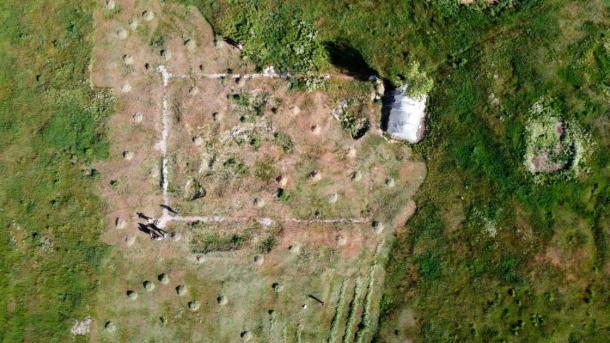
The ruins of the Ilkhanate Palace near Lake Van. (The Daily Sabah).

Connections and History of the Last Ottoman Caliph

This article discusses the recent death of Mukarram Jah and his relation to the last Ottoman caliph Abdulmecid II, his grandfather. This piece examines the interesting connection between caliphs and the Muslim religion while providing a new viewpoint by showing how impactful this information is. In addition to providing a fresh perspective, this writing goes into great detail regarding the history of caliphs, focusing on issues and discussing several incidents in the 1900s. This piece provides pictures and details, shedding new light on the caliphs and their connection to the Ottomans.

https://www.middleeasteye.net/discover/mukarram-jah-indian-prince-ottoman-caliphate

Silk Textiles from Safavid Iran, 1501–1722

Textiles have been produced in Iran for over 2,500 years, and form an important part of their material culture. The intricately woven silk textiles produced in Safavid Iran between the sixteenth and eighteenth centuries are often considered to be the peak of this art. Complex designs of people, animals, and plants are woven into a variety of silk fabrics including velvet, lampas, and brocade, as well as silk rugs. The textile industry provided an important source of revenue and trade goods for Iran, giving it economic as well as cultural importance. This essay from the Metropolitan Museum of Art webpage provides detailed information as well as images of textiles from this time period.

https://www.metmuseum.org/toah/hd/safa_3/hd_safa_3.htm

12th-Early 13th Century Decorative Statue

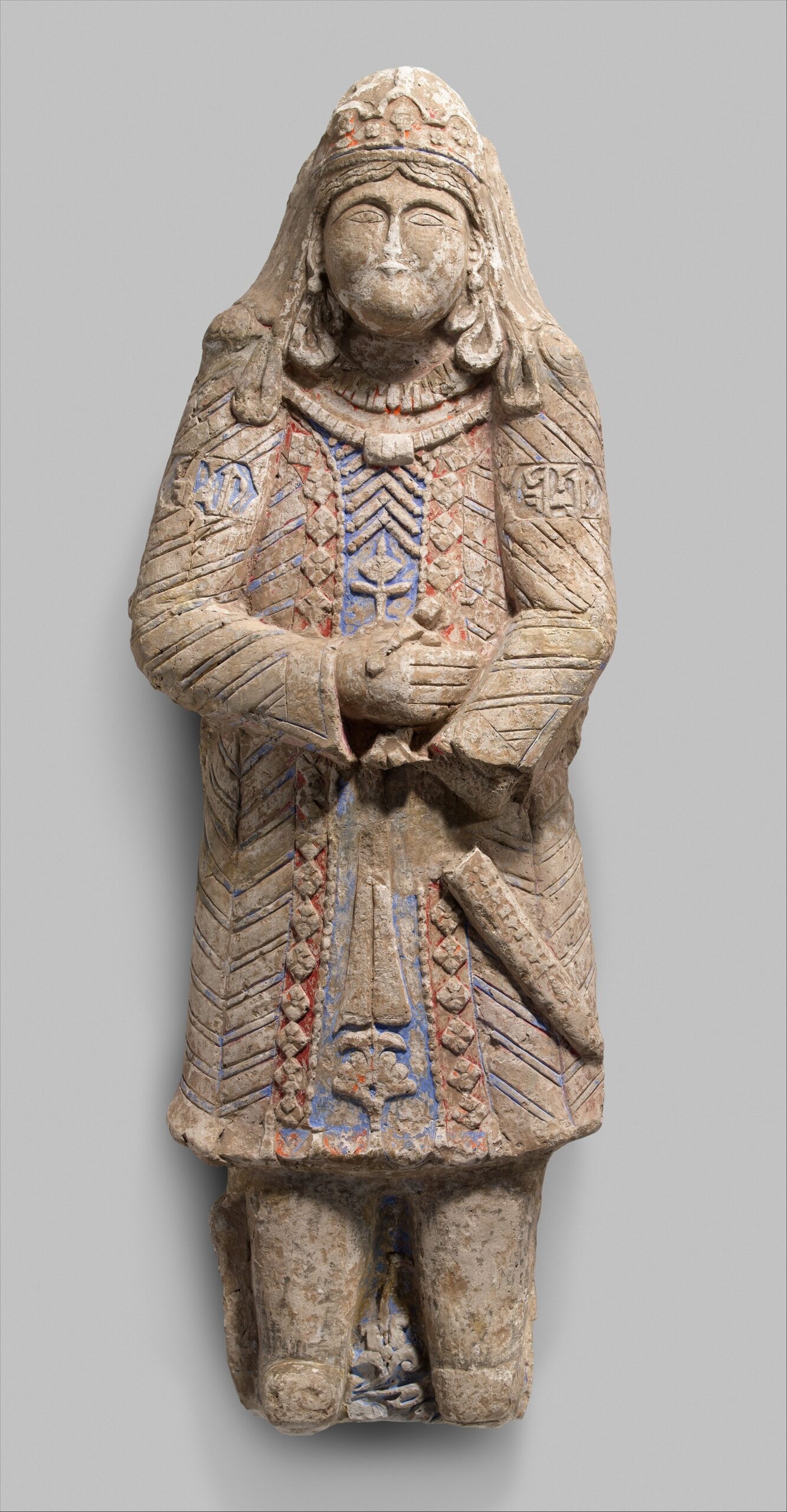
“The ornamented headdres, arms, and rich vestments of this figure suggest that it most likely represents a sovereign’s personal guard, viziers or amir. Probably meant to decorate the reception hall of a ruler’s court, be it the Seljuq sultan or one of his local vassals or successors, figures like this one would parallel and enhance actual ceremonies in the very setting in which they took place. Recent analyses have proven that a traditionally-made gypsum plaster is consistently employed on these figures and on archaeological stuccoes. This figure also displays integrated restoration of the first half of the twentieth century, including additions in a more refined gypsum, and modern pigments (some of the reds and synthetic ultramarine blue).”- MET

https://www.metmuseum.org/art/collection/search/451909

« Older posts Newer posts »