Page 10 of 31
I found this book about Shi’a Islam, by Sayyid Moustafa Al-Qazwini. One of the chapters I found Particularly interesting was the one titled “The Five Schools of Islamic Thought,” which briefly highlights the histories of the five major schools in Islam.
https://www.al-islam.org/inquiries-about-shia-islam-sayyid-moustafa-al-qazwini/five-schools-islamic-thought
I was doing research on Ataturk and found this interesting article about a man being beaten because he didn’t participate in the minute of silence. The minute of silence is done every year on the anniversary of Atatürk’s death. The beating was compared to, “fundamentalists’ habit of beating those not fasting during Ramadan. ” by the article.
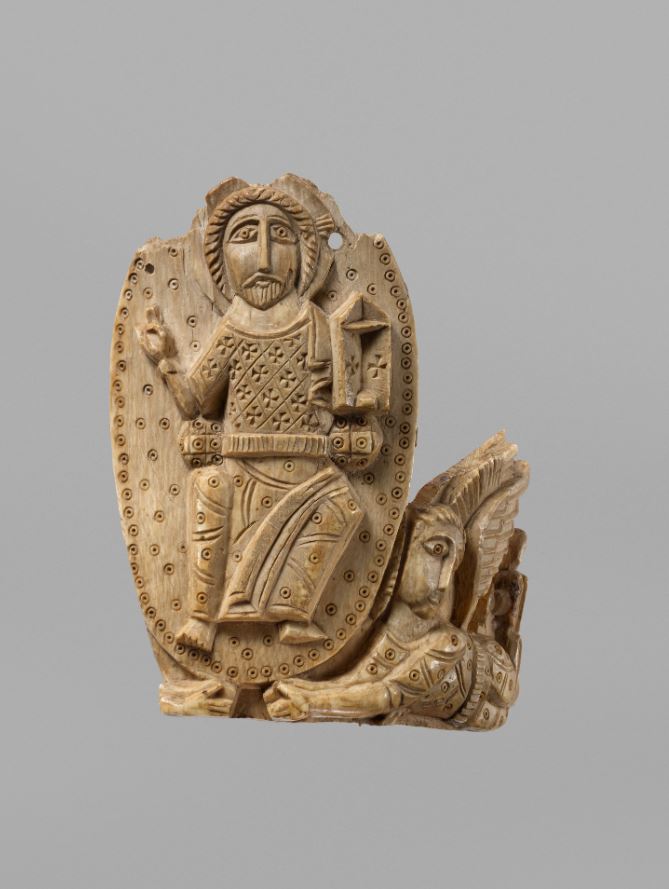
In the article ‘Byzantine Art Under Islam” by Annie Labbat the relationship between Islamic and Byzantine cultures is given a spotlight through artistic study. While the Byzantines saw the sudden rise of Islam as a threat this did not prevent the two from interacting in the realm of art. As Labbat points out, “the exchange and adaptation of motifs and genres became a common expression of power and individuality.” The relationship between the Islamic world and Byzantium was not static, and there would be frequent cross-cultural exchange.
What struck me the most was the ease to which aesthetic/cultural motifs were exchanged. While Christianity and Islam share a common heritage (being Abrahamic faiths) I had expected the intense conflicts between Byzantium and the Islamic world to hinder any artistic exhchange. However, as Labbat points out the Byzantines were keen on using Islamic writing and artistic techniques to enhance their own works. Islamic leaders also integrated Byzantine methods into their own works of art. Some saw Byzantine mosaics as aesthetically pleasing and so were used to decorate the Dome of the Rock in Jerusalem.
(Read more here: https://www.metmuseum.org/toah/hd/bzis/hd_bzis.htm)
The link is to an excellent 10-hour recitation of the Qur’an on youtube; I listened to about half an hour of the video and found it quite peaceful and melodic.
This article covers the history of the world’s first University in Morocco. There are also details about its uses today as well as who founded the university and how it began. The building is completely stunning and there is also a section of the article that covers the building and the city.
I was really excited to get to talk briefly about manuscripts in class, and it made me think of this article that I had read a while ago! There has been a lot of debate as to whether or not gold and other expensive decorations should be included in Qur’ans, and over the course of history there have been many different arguments for and against it.
This article is part of a larger series that gives a brief introduction to the basics of Islamic art, so if you’re interested in that you should definitely check it out!
https://www.khanacademy.org/humanities/art-islam/beginners-guide-islamic-world-art/beginners-guide-islamic-art/a/gold-in-the-quran?modal=1
Following part of our class discussion on Thursday, a simple search revealed that the parchment used is dated between 568 and 645 CE. The two pieces of parchment contains parts of chapters 18 to 20, using an old form of Arabic script, Hijazi. It is also noteworthy that this copy of the Qur’an is dated to less than two decades after Muhammad’s death, and supports the idea that the modern text has had little to no revision compared to the original messages.
https://www.birmingham.ac.uk/news/2015/birmingham-quran-manuscript-dated-among-the-oldest-in-the-world
https://www.theguardian.com/world/2015/jul/22/oldest-quran-fragments-found-at-birmingham-university
The value of the Arabian horse to Mamluk calvary and how their expert calvary skills along with this breed of horse helped them to defeat the Mongols is discussed in this article along with how desirable this breed became to other parts of the world.
https://archive.aramcoworld.com/issue/198602/the.arabian.horse-at.war.htm
Today Arabian horses are top choices for endurance races which can be up to around 150 miles. This article discusses the continued use of these horses in the UAE for these traditional races.
https://www.cnn.com/2012/02/27/sport/winning-post-qatar-endurance