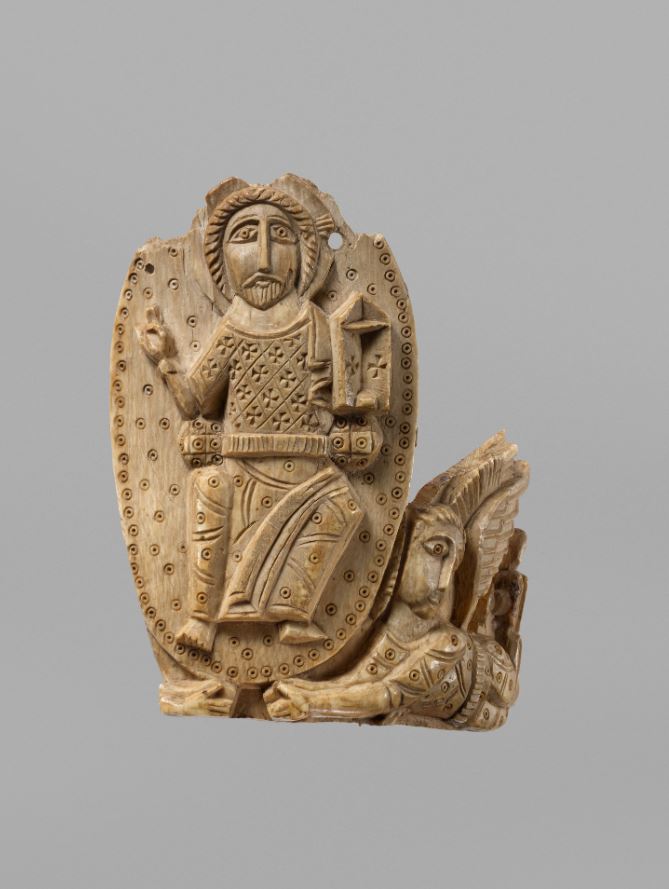
In the article ‘Byzantine Art Under Islam” by Annie Labbat the relationship between Islamic and Byzantine cultures is given a spotlight through artistic study. While the Byzantines saw the sudden rise of Islam as a threat this did not prevent the two from interacting in the realm of art. As Labbat points out, “the exchange and adaptation of motifs and genres became a common expression of power and individuality.” The relationship between the Islamic world and Byzantium was not static, and there would be frequent cross-cultural exchange.
What struck me the most was the ease to which aesthetic/cultural motifs were exchanged. While Christianity and Islam share a common heritage (being Abrahamic faiths) I had expected the intense conflicts between Byzantium and the Islamic world to hinder any artistic exhchange. However, as Labbat points out the Byzantines were keen on using Islamic writing and artistic techniques to enhance their own works. Islamic leaders also integrated Byzantine methods into their own works of art. Some saw Byzantine mosaics as aesthetically pleasing and so were used to decorate the Dome of the Rock in Jerusalem.
(Read more here: https://www.metmuseum.org/toah/hd/bzis/hd_bzis.htm)
Leave a Reply
You must be logged in to post a comment.