Course Discussion Website

Author: lancehungar

The Testament of Our Lord Jesus Christ Concerning the Mongol invasions

Manuscript in Paris, BNF – Syr. 232, fols 184r-193r (17th century; karshūnī)

Patrick Wing’s talk at the CMES “Mongols, Mamluks, And Others” conference last Saturday was centered on “The Testament of Our Lord Jesus Christ Concerning the Mongol invasions,” a 14th century Syriac Christian text that was produced in Egypt after the Mongol-Mamluk Wars.

Many Syriac Christians chose to flee to Egypt as the Mongols advanced towards them, and Egypt already had a thriving Coptic Christian community under Mamluk rule. This text is interesting, according to Wing, because it combines historical commentary with apocalyptic writing. The historical writing comes after the introduction, before the author dedicates the remainder of the work to prophetic, end-times commentary. The unknown author of this text was apparently quite familiar with the Coptic apocalyptic works because they largely followed convention.

The middle part of the document, the historical narrative, is largely concerned with the reign(s) of Al-Nasir Muhammad, although it does mention the Mamluk wars with the Crusader states and the Battle of Ayn Jalut. The unknown author also describes the Battle of Marj al-Saffar, and many other Mamluk victories, despite his critical stance towards the Mamluks overall and lamentation over the state of his co-religionists in this part of the world.

Throughout his talk, Wing referenced the work of Jos Van Lent, who wrote the short article below on The Testament.
Busbecq’s Diplomatic Strategy

The Ambassador as a Third Party: Busbecq’s Summary Account for the Year 1559 by James Tracy, in Acta Histriae, volume 22, 2014, number 2

I found this article from the UMW Library while looking for context on the Turkish Letters of Ogier Ghiselin de Busbecq. The author, University of Minnesota Professor James Tracy, begins by explaining the process of continuous consultation that kept the diplomatic efforts of Busbecq in concert with Imperial strategy. As developments on the Hungarian border escalated and threatened the peace talks, Busbecq was forced to make several tactical decisions to outmaneuver the Ottomans and press on towards a lasting agreement.

Tracy recounts and analyzes Busbecq’s various interventions in the dialogue between the two hostile empires, concluding that he was effective in his attempts to ease tensions. These interventions included changes to the draft treaty that overrode Emperor Ferdinand I’s wishes, a reallocation of gifts to placate Sultan Soleiman, and strategic payments to Ali Pasha and other viziers.

The most interesting aspect of this article is Tracy’s conclusion, which discusses Busbecq’s relationship with Michael Cernovic, the leading Imperial spy in Constantinople. Tracy attributes some of Busbecq’s cleverest moments to Cernovic’s advice instead, and makes the case that Busbecq’s letters are more self-serving than they appear at first glance. He also concludes that the Imperial council would have been aware of this fact, as Busbecq’s post-Constantinople career takes him out of the foreign service to serve as the tutor of the Imperial grandsons.

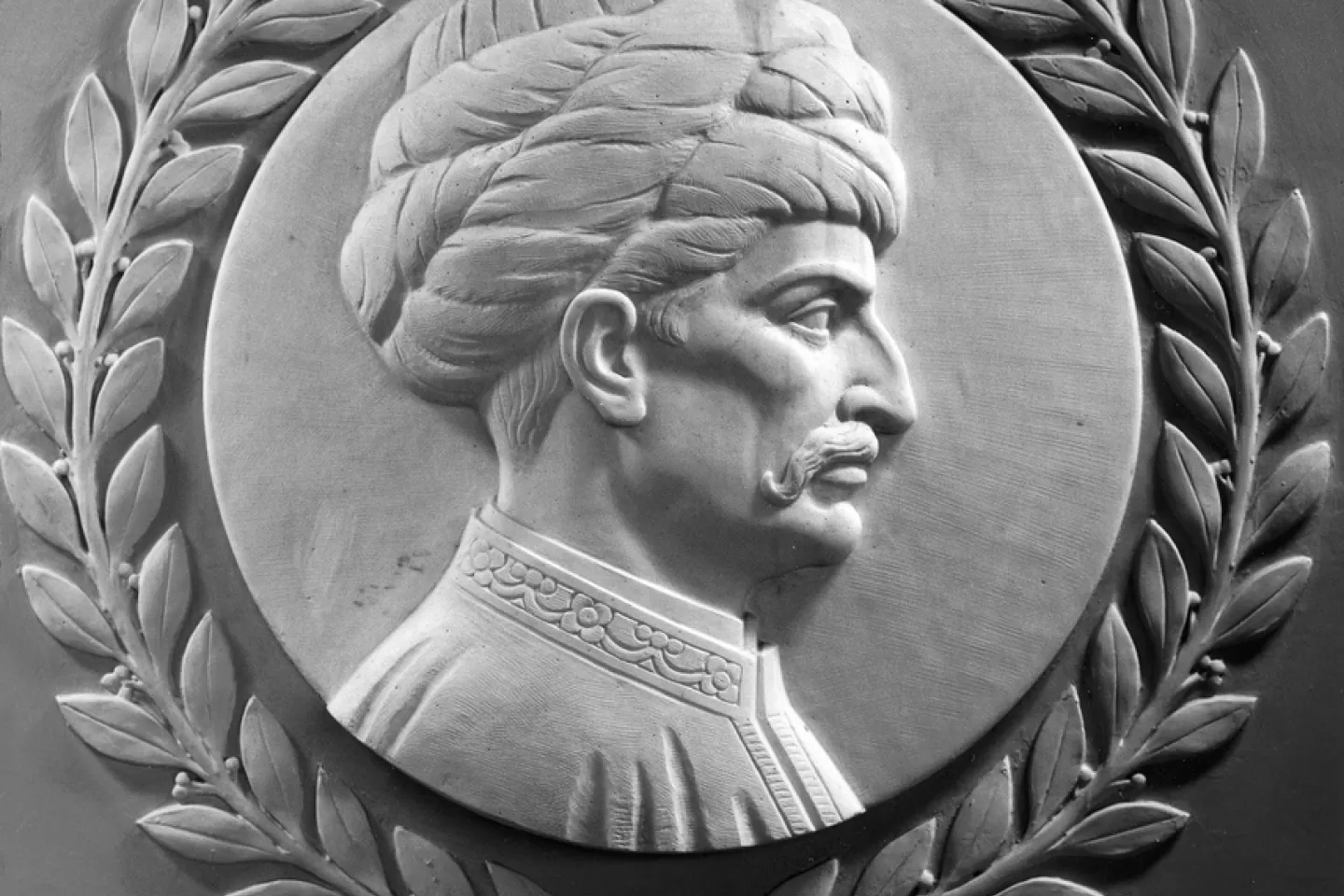
Relief Portrait of Suleiman the Magnificent at the US Capitol

I chose the Ogier Ghiselin de Busbecq book to read over spring break, and the Ottoman Sultan Suleiman/Soleiman is a central figure in de Busbecq’s letters. The architects of the Capitol also paid homage to Suleiman as one of the “great lawgivers” of history, and included his marble relief portrait on the US House Chamber Doors. There are 23 total portraits including Hammurabi, Thomas Jefferson, Lycurgus, Moses, and another figure from the class — Maimonides.

Image Credit: https://www.aoc.gov/explore-capitol-campus/art/relief-portrait-plaques-lawgivers

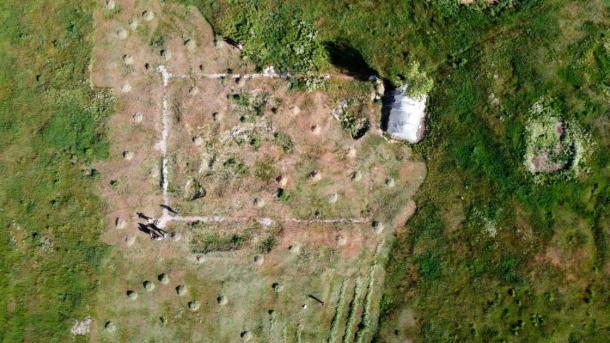
Archaeologists Uncover Hülegü Khan’s Palace in Eastern Turkey

This article discusses the recent archaeological finding of Hülegü Khan’s palace in Van Province, Turkey. Scholars believe that this was a summer palace for the Khan. Although the complex was looted heavily over the centuries, primary sources talk about a palace in the area and ceramic evidence indicates that a large complex and city were at this location. The team on this excavation also found a nearby caravanserai on the Silk Road and porcelain items that confirm the extent of the Ilkhanate’s trade with the far east.

Article: https://www.ancient-origins.net/news-history-archaeology/khan-palace-0017053

The ruins of the Ilkhanate Palace near Lake Van. (The Daily Sabah).