In class, we talked about the Aga Khan, the leader of the Ismailis, and their work in preserving art and architecture. An interesting thing I noticed is that the architectural history program at Harvard University is called the Aga Khan Program for Islamic Architecture. The program is supported by an endowment from the Aga Khan starting in 1979. It shows that the Aga Khan supports architectural history and preservation both in the Islamic world and outside of it.
Page 6 of 31
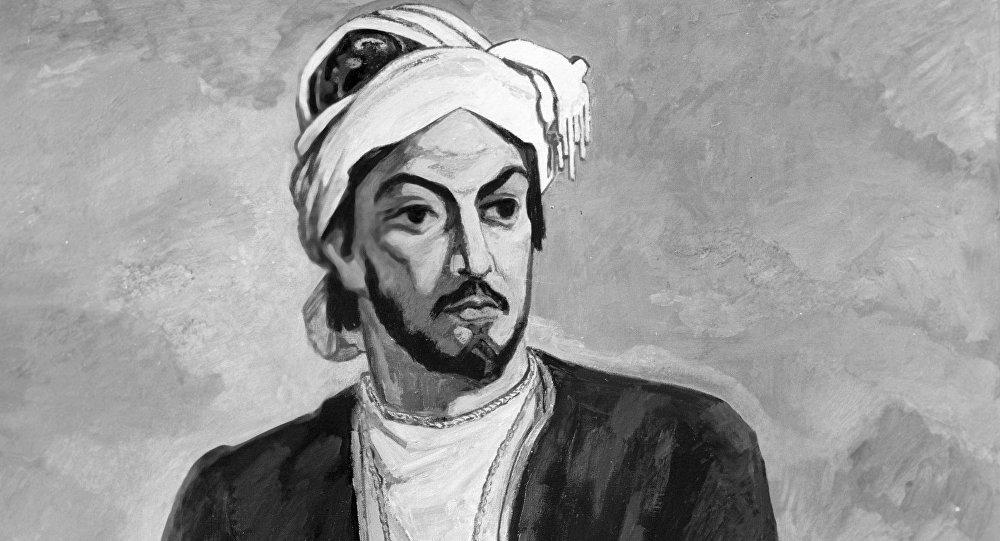
A few weeks ago in class, we discussed Nasimi (d. 1417). Recently I was doing more research on him and found that in 2019 the President of the Republic of Azerbaijan declared 2019 the year of Nasimi. This decision was part of the government’s plans to further socioeconomic and cultural development. A year prior the Heydar Aliyev Foundation and the Azerbaijani Ministry of Culture hosted the first Nasimi Festival of Poetry, Arts, and Spirituality in Azerbaijan. The festival involved “world-famous singers, philosophers, scientists, who write about spirituality in modern society, as well as professionals, amateurs in this field and young people.” This festival was also held in Russia. I found this interesting because while I knew he was influential at the time, I did not know he was this important today.
https://www.azernews.az/culture/143968.html
Several weeks ago, during the Islamic philosophy lecture, we learned about several philosophers prior to the Avicennan Turn that caught my interest. To my great surprise, many of these philosophers, such as Al-Razi and Al-Farabi, were in fact very skeptical of religion, or deemed it as less important or valid than reason; in other words, they priortized the findings of philosophy and rationality over spirituality. But most of these men still believed in a god, even if not necessarily God as is portrayed in the Qur’an.
One philosopher in particular really sparked my interest though: Ibn Al-Rawandi, who was at first a Mu’tazilite scholar, then a Shi’a, and finally, an atheist, rejecting and criticizing all iterations of religion. What I find most fascinating, though, is the apparent lack of persecution he experienced: there is limited information on Al-Rawandi in the first place – the only sources I found that were not behind a paywall from the brief research I did indicate that he was not persecuted or harassed for his beliefs.
According to one webpage which I found, he had written over one hundred books, but only segments of his works remain, and they existed only in critics of his work – Muslim apologetics who sought to debunk al-Rawandi’s claims. Al-Rawandi lived fairly early on in Islamic history – around the tenth century, which to me makes his story all the more fascinating. I would be curious to do further reasearch into the treatment of atheists (and skeptics in general) in the Islamic World, especially in some of the later empires such as the Timurids or the Ottomans.
Sources used: https://www.muslimphilosophy.com/ip/rep/H035.htm
https://en.wikipedia.org/wiki/Ibn_al-Rawandi
Muslim views on abortion are shaped by Hadith (the words, actions, and the silent approval of the Islamic prophet Muhammad as transmitted through chains of narrators), as well as by the opinions of legal and religious scholars and commentators. The Quran does not directly address intentional abortion, leaving greater discretion to the laws of individual countries. Although opinions among Islamic scholars differ over when a pregnancy can be terminated, there are no explicit prohibitions on a woman’s ability to abort under Islamic law
There are 57 members in the Organization of Islamic Conference—an organisation of countries with Muslim majorities or pluralities. Most Muslim countries have restrictive abortion laws that permit abortions only when the life of the mother is threatened. Twelve members of the Organization of Islamic Conference allow unrestricted access to abortion. With the exception of Turkey and Tunisia, they are mainly former Soviet Bloc states. Bahrain, a politically and socially conservative Muslim state, is the 12th among these countries to permit unrestricted access to abortion. Among socially conservative Muslim countries, seven countries permit abortion in the first 4 months of gestation for fetal deformities, four countries in Sub-saharan Africa (Benin, Burkina Faso, Chad and Guinea) and three in the Middle East (Kuwait, Qatar and, now, Iran).
During the lecture on 2/20, we discussed the practice of Ramadan and the exceptions/exclusions that are permitted. I was curious about whether or not pregnant women also participated in Ramadan. My mother is an OB/GYN, so I thought it would be interesting to research more about the topic. I found a really interesting cross-sectional study conducted in 2008 on 353 females in Pakistan. The study examines the concepts and practices of maternal fasting during pregnancy in Pakistani Muslim women. I found it interesting that most women still fast during their pregnancy.
Here is the link if you’d like to learn more!
The Battle of Tours, also known as the Battle of Poitiers and the Battle of the Highway of the Martyrs (Arabic: معركة بلاط الشهداء), took place on October 10, 732. It was a significant battle during the Umayyad invasion of Gaul. The opposing forces were the Frankish and Aquitanian troops, led by Charles Martel, and the invading Muslim forces of the Umayyad Caliphate, commanded by Abd al-Rahman al-Ghafiqi, the governor of al-Andalus.
“The alleged child bride of Islam’s prophet is invoked by anti-Muslim critics of all stripes,” says Javad T. Hashmi for Newsweek, but recently the scholar Joshua Little has published a doctoral thesis that suggests otherwise. Little found that the marital-age hadith’s earliest common links in the mid-to-late 8th century CE, “appear to have mostly created their respective versions from their own minds and/or by borrowing and reworking the material of their contemporaries, rather than accurately—or even inaccurately—transmitting material from their cited sources or predecessors.” (Little, 321). He goes on to say that “even if the marital-age hadith can be traced back to ʿĀʾišah… there are strong reasons to doubt its authenticity,” including that A’isha most likely did not know her own age and the belated rise in dating in early Muslim society. Remember that the only reason scholars are relatively confident about the age of Muhammad is because he was born close to the “Year of the Elephant,” when an Ethiopian army invaded the Hijaz. If not even A‘isha can confirm her own age, then Little believes that any age is “the product of speculation or guesswork, whether by ʿĀʾišah or someone later.” (Little, 326). That being said, the best estimation of the age of A‘isha at the time of her marriage would be based upon the protocol of the time which would be to marry a girl off once she reached menarche at the age of twelve-fourteen. Little goes further by speculating that A‘isha’s menarche could have been delayed by the stressful environment and impoverished conditions of the Hijaz, thus making A‘isha much older at the time of her marriage to Muhammad. However, this is impossible to improve, fully speculative, and written by a man with a doctorate in philosophy, who does not have the authority to make any statements on A‘isha’s menstruation cycle.
All this being said, Little’s research does provide evidence that A‘isha’s age is older than what scholars or Islamophobics believed. However, it does not prevent one with a 21st-century mindset from viewing the relationship–at the least–as problematic. And therein lies the first problem, if Muhammad and A‘isha’s marriage was in keeping with the norms of 7th century Arabia, then we can not criticize him for not conforming to our norms nearly 1,500 years later. Additionally, the popular characterization of A‘isha as the “child bride” glosses over the enormous impact she had on the early Islamic world besides just marrying. This research does provide a strong rebuttal to Islamophobics who use A‘isha’s age as easy ammunition, but her age was never really the problem, it was just an easy solution to justify bigotry. Perhaps Little’s research is the first step in resting the debate on A‘isha’s age towards a larger discussion of her impact and Islamophobia in the modern world.
https://newlinesmag.com/essays/oxford-study-sheds-light-on-muhammads-underage-wife-aisha/
https://ora.ox.ac.uk/objects/uuid:1bdb0eea-3610-498b-9dfd-cffdb54b8b9b/files/dhm50ts230
In class on Tuesday, we discussed the discovery of what many consider one of the oldest surviving fragments of the Qur’an. Here is a video that gives a brief overview of the discovery and a link to the University of Birmingham’s website page about the manuscript.
https://www.islamonline.net/en/i-want-to-know-about-aishah-bint-abu-bakr/
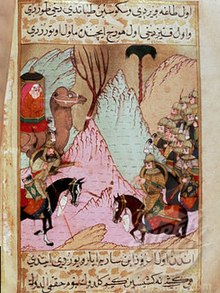
This article is all about Muhammad’s youngest wife, Aisha bint Abu Bakr. After Khadija, she was Muhammad’s most beloved wife and one of the most politically important. After he died, she was a close advisor of Khalifa Umar. She led an army against ‘Ali for not prosecuting Uthman’s murderers, but was defeated. ‘Ali sent her back to Mecca to live out the rest of her life, showing his respect for her. She was considered a leading expert on the Qur’an and spoke many of the Hadiths, being one of four people who spoke over 2,000. Aishah was important to early Islam outside of being Muhammad’s wife as a religious and political leader.

While this article is a year old, it is a reminder that the anniversary of the Circassian genocide is next month. After 150 years, this article gives great insight into how the Circassians have fared over time. As a show of solidarity, representatives from every political party in Turkey showed up to the ceremony last year despite the nation’s polarized political scene. Circassian as a language disappeared in the 1970s and the culture as a whole is on the brink of extinction as well. This byproduct of the genocide is unsurprising and unfortunate. Circassians in Turkey want to be able to travel to Russia without a visa as it used to be their homeland. Other minorities who have suffered violence under Russian rule were present at the event as well. This form of camaraderie only reinforces my prior post about Zelensky citing the Naqshbandi leader in an effort to gain support from minorities in Russia. Overall, the article demonstrates that the Circassians will likely succumb to a delayed cultural genocide as a result of Russian policy 150 years ago.