Course Discussion Website

Author: LauraC

European Depictions of Tumanbay

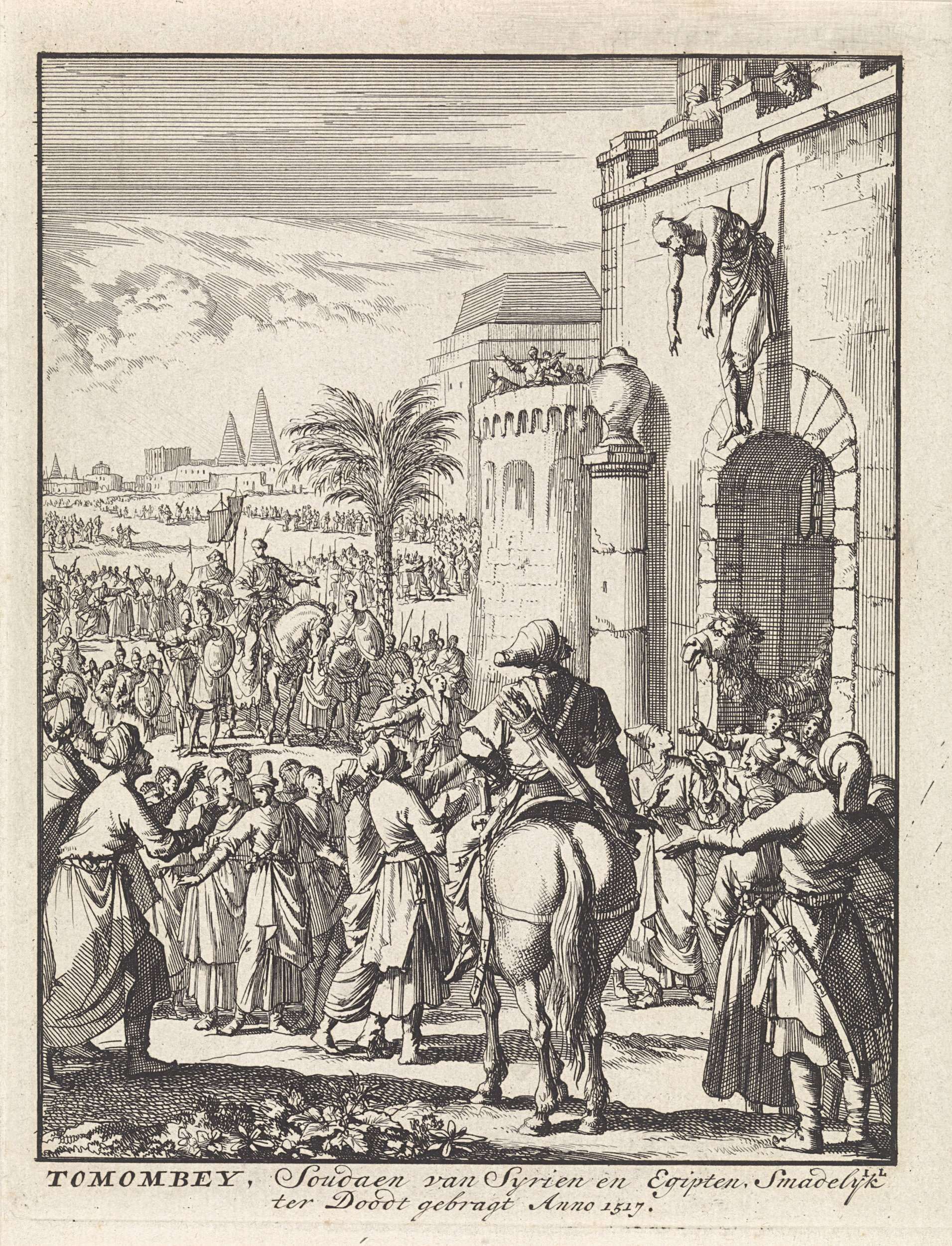
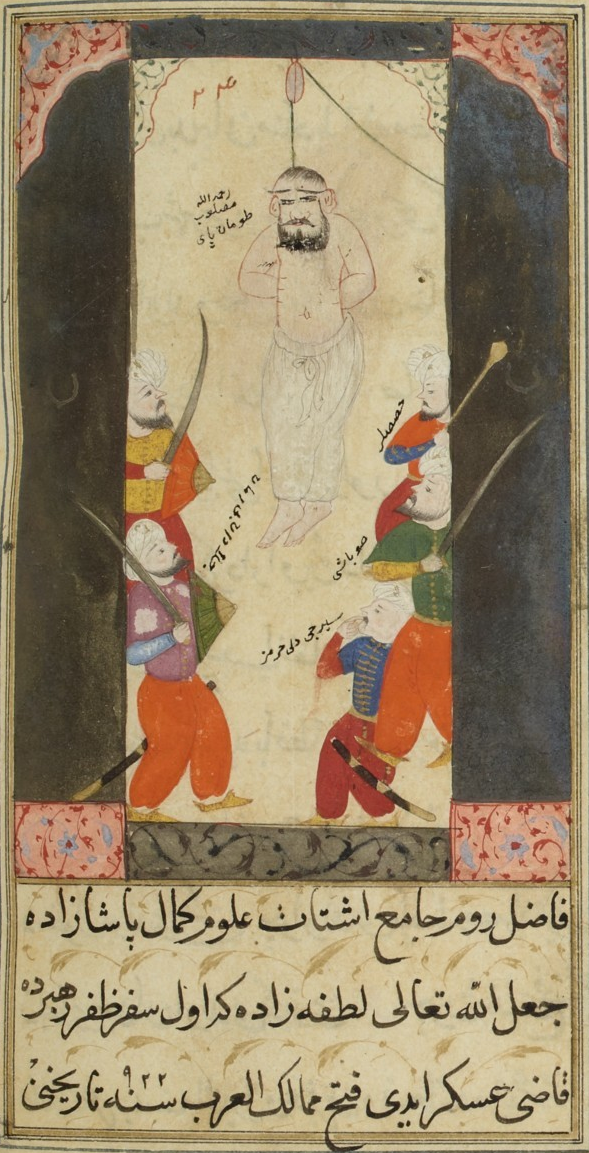
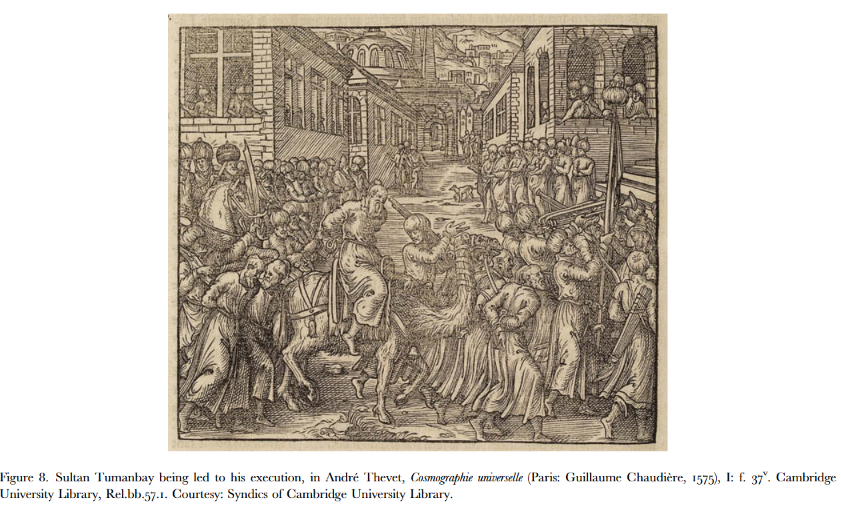
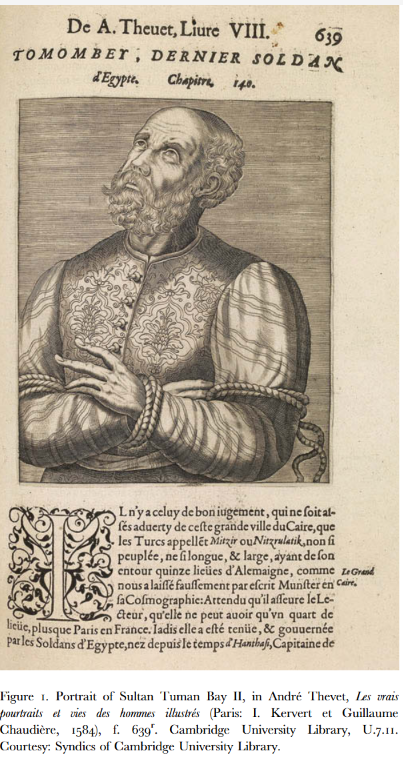
Weirdly enough,a lot of Europeans took inspiration from the story of Tumambay/Tuman Bay, including biographies and artwork. I found this article which gives somewhat of an overview and focuses on Andre Thevet’s Les vrais pourtraits et vies des hommes illustrés. According to Milwright, “Thevet’s illustration shows the sultan bound in ropes, bare-headed and looking upward in a beseeching manner that invites comparison with European representations of Christian martyrs.” I have put up some of the European images as well as some of the more Islamicate art about the event. Milwright suggests that the Mamluk obsession, as opposed to just the oriental obsession, is because of the cultural exchanges that happened in Venice.
Tomombey, son of Syria and Egypt, shamefully put to death in the year 1517. Jan Luyken / Lambert van den (author) Bosch. From 1698.

Bad News: Two More Dschinghis Khan Songs

This one is not great.

This one is a stupid, but good, disco song. And, this time, two guys are in slightly offensive costumes!

It’s about a literary character called Hadschi Halef Omar created by Karl May. If you’re interested in German orientalist fiction, check it out. (There’s also a movie from 1964 based on his book Der Schut) English lyrics: https://lyricstranslate.com/en/Hadschi-Halef-Omar-Hadschi-Halef-Omar.html. Moskau is still their best song.

From Wikipedia: Halef is the exceedingly loyal servant, companion and friend of German adventurer Kara Ben Nemsi. Halef accompanies Kara Ben Nemsi through all his adventures in the Middle East from Durch die Wüste to Der Schut. He is a very devout Muslim, and throughout the adventures with Kara Ben Nemsi he tries to convince him of the superiority of Islam.”

Dschinghis Khan by Dschinghis Khan

Dschinghis Khan was Germany’s entry for Eurovision in 1979, and they created an entire band to perform it. The song is pretty nuts, but catchy, and one of my mom’s favorites. I prefer their song Moskau. There’s also one member of the band who is just dancing around in what I would consider offensive costume, but it was the 70s. Here is the English translation: https://genius.com/Dschinghis-khan-genghis-khan-english-version-lyrics.

“The Hadith of ʿĀʾišah’s Marital Age: A Study in the Evolution of Early Islamic Historical Memory”

“The alleged child bride of Islam’s prophet is invoked by anti-Muslim critics of all stripes,” says Javad T. Hashmi for Newsweek, but recently the scholar Joshua Little has published a doctoral thesis that suggests otherwise. Little found that the marital-age hadith’s earliest common links in the mid-to-late 8th century CE, “appear to have mostly created their respective versions from their own minds and/or by borrowing and reworking the material of their contemporaries, rather than accurately—or even inaccurately—transmitting material from their cited sources or predecessors.” (Little, 321). He goes on to say that “even if the marital-age hadith can be traced back to ʿĀʾišah… there are strong reasons to doubt its authenticity,” including that A’isha most likely did not know her own age and the belated rise in dating in early Muslim society. Remember that the only reason scholars are relatively confident about the age of Muhammad is because he was born close to the “Year of the Elephant,” when an Ethiopian army invaded the Hijaz. If not even A‘isha can confirm her own age, then Little believes that any age is “the product of speculation or guesswork, whether by ʿĀʾišah or someone later.” (Little, 326). That being said, the best estimation of the age of A‘isha at the time of her marriage would be based upon the protocol of the time which would be to marry a girl off once she reached menarche at the age of twelve-fourteen. Little goes further by speculating that A‘isha’s menarche could have been delayed by the stressful environment and impoverished conditions of the Hijaz, thus making A‘isha much older at the time of her marriage to Muhammad. However, this is impossible to improve, fully speculative, and written by a man with a doctorate in philosophy, who does not have the authority to make any statements on A‘isha’s menstruation cycle.
All this being said, Little’s research does provide evidence that A‘isha’s age is older than what scholars or Islamophobics believed. However, it does not prevent one with a 21st-century mindset from viewing the relationship–at the least–as problematic. And therein lies the first problem, if Muhammad and A‘isha’s marriage was in keeping with the norms of 7th century Arabia, then we can not criticize him for not conforming to our norms nearly 1,500 years later. Additionally, the popular characterization of A‘isha as the “child bride” glosses over the enormous impact she had on the early Islamic world besides just marrying. This research does provide a strong rebuttal to Islamophobics who use A‘isha’s age as easy ammunition, but her age was never really the problem, it was just an easy solution to justify bigotry. Perhaps Little’s research is the first step in resting the debate on A‘isha’s age towards a larger discussion of her impact and Islamophobia in the modern world.

https://newlinesmag.com/essays/oxford-study-sheds-light-on-muhammads-underage-wife-aisha/

https://ora.ox.ac.uk/objects/uuid:1bdb0eea-3610-498b-9dfd-cffdb54b8b9b/files/dhm50ts230