Page 4 of 31
In the past few decades, the practice of horse back archery in Mongolia has experienced a rebirth in the modern day after being suppressed during the Manchu era (1691-1911). The video below has Altan Nergui, the lead archer of Namnaa horse archery club, one of those involved with reviving the practice, firing at a target strapped to his friends back. Altan studied Mongol archery in history books and worked to incorporate it into on the ground techniques. Another part of the revival is the introduction of the Khiimor’/Spirit Horseback Archery Championship, beginning in 2019 and continuing to 2025.
Dschinghis Khan was Germany’s entry for Eurovision in 1979, and they created an entire band to perform it. The song is pretty nuts, but catchy, and one of my mom’s favorites. I prefer their song Moskau. There’s also one member of the band who is just dancing around in what I would consider offensive costume, but it was the 70s. Here is the English translation: https://genius.com/Dschinghis-khan-genghis-khan-english-version-lyrics.
The partially-visible fresco, identified by Cambridge University historian Dr. Federica Gigante, almost certainly depicts a real tent, now lost, which the artist may have seen in the same church. The brightly colored original tent, covered in jewels, could have been a diplomatic gift from a Muslim leader or a trophy seized from the battlefield.
Gigante’s research, published today in The Burlington Magazine, also suggests that a high-profile figure such as Pope Innocent IV—who gifted several precious textiles to the Benedictine convent church of S. Antonio in Polesine, Ferrara, where the fresco was painted—may have given such a tent.
“At first, it seemed unbelievable and just too exciting that this could be an Islamic tent,” said Dr. Gigante. “I quickly dismissed the idea and only went back to it years later with more experience and a braver attitude to research. We probably won’t find another such surviving image. I haven’t stopped looking but my guess is that it is fairly unique.
https://phys.org/news/2025-02-rediscovered-fresco-reveals-islamic-tents.html
Gigante’s research, published today in The Burlington Magazine, also suggests that a high-profile figure such as Pope Innocent IV—who gifted several precious textiles to the Benedictine convent church of S. Antonio in Polesine, Ferrara, where the fresco was painted—may have given such a tent.
“At first, it seemed unbelievable and just too exciting that this could be an Islamic tent,” said Dr. Gigante. “I quickly dismissed the idea and only went back to it years later with more experience and a braver attitude to research. We probably won’t find another such surviving image. I haven’t stopped looking but my guess is that it is fairly unique.
https://phys.org/news/2025-02-rediscovered-fresco-reveals-islamic-tents.html
The painting Islamic Scientists was one of the last that Syrian artist Mahmoud Hammad produced before his death in 1988. It is also perhaps his most ambitious. The work tackles a vast timeline, condensing centuries of Islamic history into a 120cm x 180cm canvas.
Yet, the painting has a marked blind spot. The canvas is populated entirely by men – with no reference to the achievements of the female thinkers and intellectuals of the Islamic Golden Age.
A new companion piece, A Wonderful World, by Iraqi artist Afifa Aleiby aims to address this oversight. Commissioned by the Barjeel Art Foundation, it will be officially unveiled during a ceremony at Sharjah’s House of Wisdom on Sunday. A Wonderful World will be displayed beside Hammad’s Islamic Scientists, which is also part of the foundation’s collection and has been displayed at the Sharjah Museum of Islamic Civilisation since 2014.
https://www.thenationalnews.com/arts-culture/art-design/2025/02/23/mahmoud-hammad-islamic-scientists-women/
Yet, the painting has a marked blind spot. The canvas is populated entirely by men – with no reference to the achievements of the female thinkers and intellectuals of the Islamic Golden Age.
A new companion piece, A Wonderful World, by Iraqi artist Afifa Aleiby aims to address this oversight. Commissioned by the Barjeel Art Foundation, it will be officially unveiled during a ceremony at Sharjah’s House of Wisdom on Sunday. A Wonderful World will be displayed beside Hammad’s Islamic Scientists, which is also part of the foundation’s collection and has been displayed at the Sharjah Museum of Islamic Civilisation since 2014.
https://www.thenationalnews.com/arts-culture/art-design/2025/02/23/mahmoud-hammad-islamic-scientists-women/
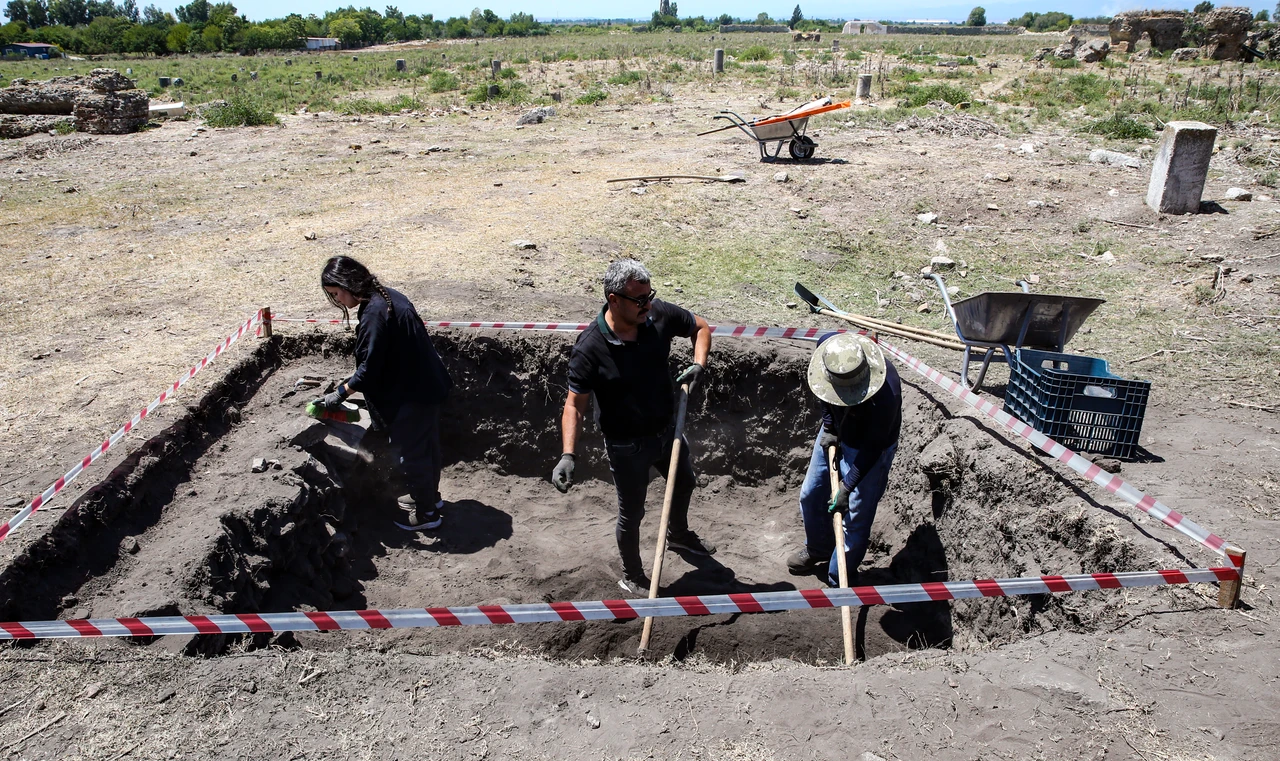
Archaeologists have uncovered the remains of an Abbasid-era mosque in the ancient city of Anavarza, located in Adana’s Kozan district, Türkiye. Believed to have been constructed under the reign of Caliph Harun al-Rashid, this mosque is considered potentially the earliest known mosque in Anatolia. Excavation efforts, led by Fatih Erhan from Osmaniye Korkut Ata University, revealed architectural elements such as bricks, a significant ash layer, and Abbasid ceramics, suggesting a layout similar to the Umayyad Mosque in Damascus. Historical records indicate that the mosque was destroyed in 962 by the Byzantine general Nikiforos Fokas. The discovery offers valuable insights into early Islamic architecture in the region, and restoration efforts are planned to preserve its structural elements, including the mihrab and minbar.
They are to focus on Sufi poetry, art, and writings that they have been given from the collections of the Maktab Tarighat Oveyssi (MTO) Shahmaghsoudi School of Islamic Sufism, a non-profit organisation with centres across six continents which initiated the museum.
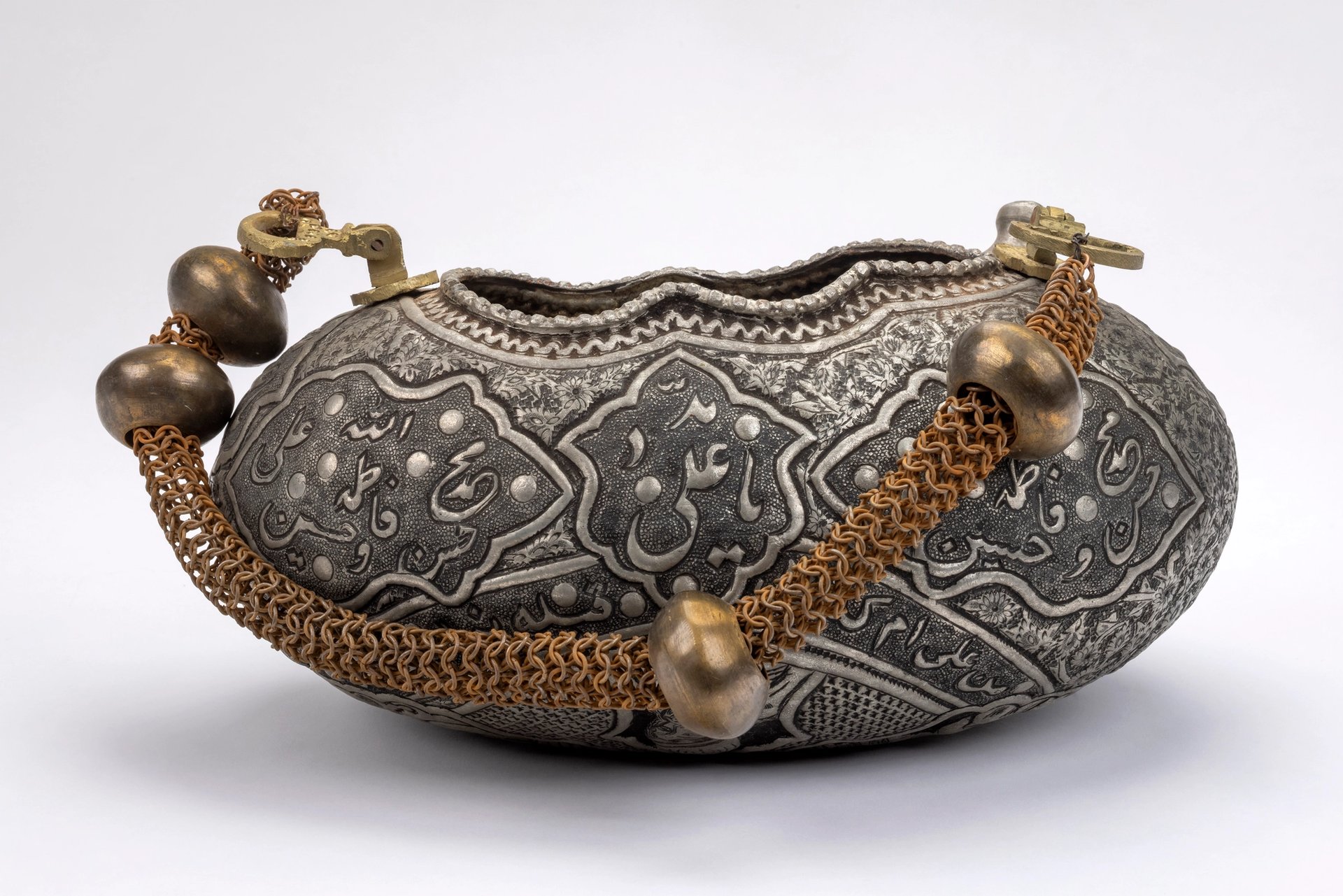
A kashkūl from the collection of the Musée d’Art et de Culture Soufis MTO
The art produced in the Mamluk sultanate hasn’t received as much attention as many other periods and places in Islamic history, with the upcoming exhibition at the Louvre being the first in a major European museum. The exhibition will feature nearly 260 objects including textiles, manuscripts, ivories, as well as portraits of important historical figures from the period. A focus will be placed on the diversity and plurality of Mamluk society, and its connections with the rest of the world. The exhibition will run from April 30 to July 28.

https://www.louvre.fr/en/exhibitions-and-events/exhibitions/mamluks
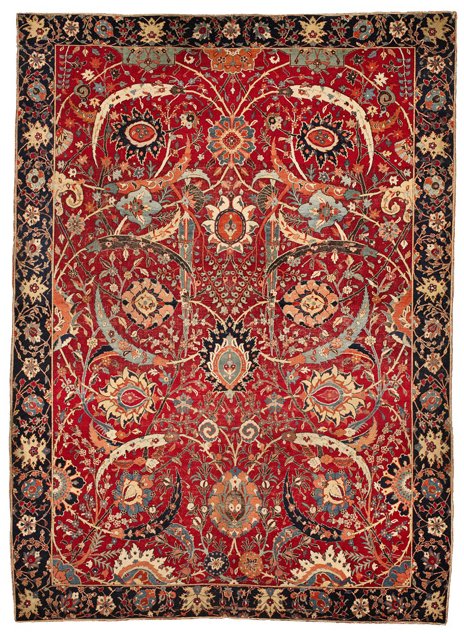
The art of carpet weaving in Persia can be traced back to ancient times, with evidence of carpet fragments found in archaeological sites dating back to the 5th century BC. However, it was during the Safavid dynasty in the 16th century that Persian carpets reached their peak in terms of design and craftsmanship.
Origins and Early Development: Persian carpets, also known as Iranian rugs, have a rich history that dates back 2,500 years. They were initially developed by Persian nomads as a practical necessity to guard against the cold and damp floors. The earliest recorded mention of these illustrious carpets goes back to the Achaemenid Dynasty, around 500 BC. The ancient Greek historian Xenophon documented their luxuriousness and ability to enhance the opulence of Persian homes in his book “Anabasis”.
Safavid Dynasty (16th Century): The Safavid period marked a golden era for Persian carpets. These exquisite textiles were produced in court manufactories in cities like Isfahan.
Safavid carpets are famous for their elaborate colors and artistic designs. They are treasured in museums and private collections worldwide. The variety and elaborateness of Persian carpet designs set them apart from other Oriental rugs. They reflect the history of Iran, Persian culture, and its diverse peoples.
Weaving Techniques and Materials: Carpets woven in towns and regional centers like Tabriz, Kerman, Isfahan, and Kashan are characterized by specific weaving techniques and high-quality materials. Nomadic and small village weavers produce rugs with bold designs that are considered the most authentic and traditional rugs of Persia. Gabbeh rugs are well-known examples of this tradition.
Decline and Revival: Carpet weaving faced periods of decline due to political unrest and commercial pressures. The introduction of synthetic dyes in the 19th century had an impact.
However, town manufactories like those in Tabriz played a crucial role in reviving the tradition after the decline phases.
In summary, Persian carpets are not just textiles; they embody centuries of creativity, ingenuity, and cultural significance in Iran. Their intricate patterns and vibrant colors continue to captivate admirers worldwide.
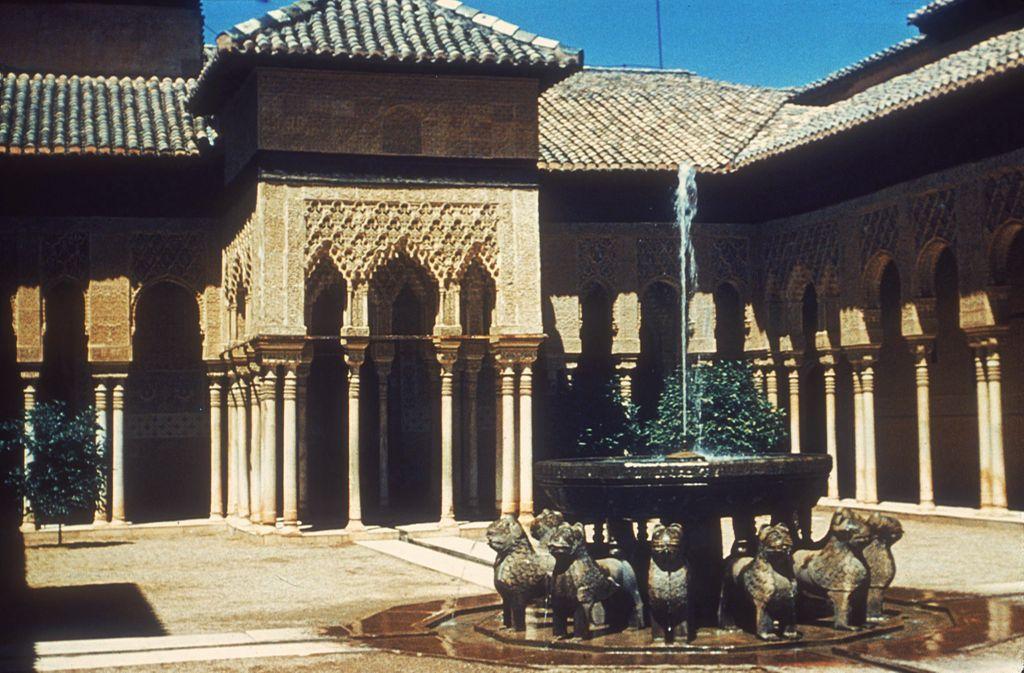
After the al-Andalus discussion in class on Tuesday, I wanted to research Granada’s red palace. The photo above is of the lion fountains we discussed in class. You can see the artistic and cultural syncretism in the sculpture and palace. Alhambra used to be a system of palaces that made up a separate city on a hill overlooking Granada, almost like a Vatican City/Rome thing. The lion fountains are part of the Palace of the Lions, commissioned by Muhammed V, the Sultan of the Emirate of Granada. Construction lasted from 1362 to 1391.
The link below takes you to the entire J-store catalogue of Alhambra (make sure you’re signed into the library website).