Medieval Islamic Civilization

Course Discussion Website

Page 21 of 31

Ottoman Harem

Image result for Suleiman the Magnificent Documentary

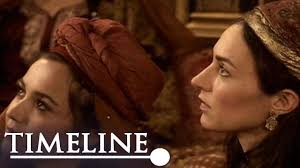
Here is a documentary on a few of the most powerful women in the Ottoman Empire. Whether concubines, wives, or mothers, they wielded significant power over the empire from within the harem.

With any documentary, be careful; not everything said is 100% accurate. Conjectures can be touted as fact, and context is often manipulated or omitted. Take this documentary as a general introduction, not as a dissemination of canonized historical fact. Having said that, this is a beautifully done documentary with several legitimate and renown scholars who provide great insight.

The above documentary can be supplemented with this ten minute clip, from minute 39 to 49, which discusses the role women in the harem played, particularly as mothers of the sultan’s sons. (Login to the library first to ensure the link works properly.)

Harvard’s Free Course on the Quran

“Islam Through Its Scriptures” (Link)
From the intro page:
What you’ll learn
An introduction to the place of the Quran in Muslim cultures
Major themes of the Quran
The historical and cultural contexts of the Quran
Interpretive skills that enable a more nuanced reading of the Quran
Diverse approaches Muslims have adopted to engaging with Quranic texts, including issues in contemporary interpretation

These objectives all relate to the exploration of what Islam is.

Magnificent Century

Nebahat Çehre, Okan Yalabik, Halit Ergenç, Selma Ergeç, Nur Fettahoglu, and Meryem Uzerli in Muhtesem Yüzyil (2011)

This link takes you to the first episode of a Turkish television drama. The show ran for four seasons, beginning in 2011. It’s in Turkish but there are English subtitles. The plot is centered on Suleiman I (the Magnificent), but has much artistic license. 

Why watch:  

  1. It’s done beautifully. The costumes, set (Topkapi Palace!), cinematography, score–it’s all great.
  2. It’s good immersion for terminology. While to us words like imam, mufti, vizier, etc., are “vocab” words, they’re used in everyday speech in the show. Repeated exposure to these terms in their natural use helps us remember, understand better, and use them naturally ourselves. The same thing happens with place names–the more we hear it in context, the better we’ll understand and internalize.
  3. It’s a good test of your knowledge: Since it’s based on facts, test it against what you’ve learned. What does the show get right, what’s almost right, what is super fictionalized, and what do you need to fact check?

Here’s it’s IMDB link.  https://www.imdb.com/title/tt1848220/

Here is a short video and a link to an article about a 19th-20th major Sufi influence in the West, Inayat Khan. He was an Indian Muslim Sufi musician who is credited with bringing Sufism to the West. In 1919, he traveled to the US and put on performances and gave guest lectures. He believed that music was an “instrument of divinity.” His life is an interesting perspective on Sufi mysticism.

Video: https://www.shambhala.com/videos/a-profile-of-hazrat-inayat-khan/

Article: https://www.ncbi.nlm.nih.gov/pmc/articles/PMC2922367/

Hajjonomics: The business of getting India’s pilgrims to Mecca

This article discusses how private tour operators are trying to make the most of their share of India’s Hajj market and how religious tourism represents 20% of their revenue. The Indian government runs a lottery to send pilgrims on the Hajj and private tour operators are allocated 30% of India’s allotted quota. They provide travel packages and often offer perks the government lottery doesn’t, such as more conveniently located hotels. They also use Umrah tours as a stepping stone to win Hajj business when customers are ready to make the pilgrimage.

https://www.aljazeera.com/ajimpact/hajjonomics-business-indias-pilgrims-mecca-190808202539949.html

« Older posts Newer posts »