
This webpage from Ted.com lists a handful of Ted Talks for educating non-Muslims about Islam today.
I’ve learned that if I want to know about a religion, I should ask its members about it. These talks let us hear from diverse Muslims.
Course Discussion Website
This webpage from Ted.com lists a handful of Ted Talks for educating non-Muslims about Islam today.
I’ve learned that if I want to know about a religion, I should ask its members about it. These talks let us hear from diverse Muslims.

I came across this article on Facebook, and while the article itself is interesting, the single comment on FB (from an August 1st post) about it is what I found informative:
“Stupid not our Faith, our lord freed women with the excellent example demonstrated by prophet Mohammed prayers and peace on him.”
This is a significant contribution to informing the general American public on what Islam is not.
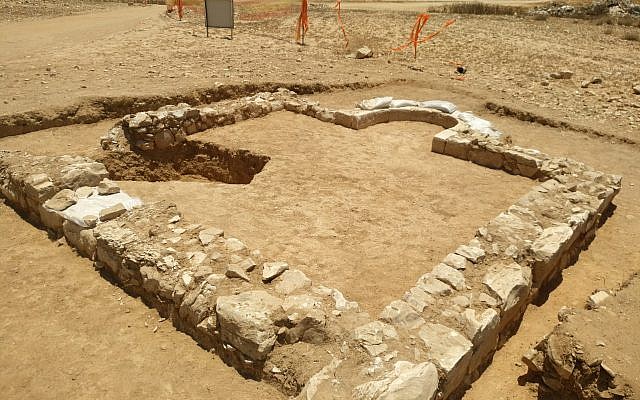
And not just a mosque, but a little town too! A sample from the article states the importance of the find:
“This is one of the earliest mosques known from the beginning of the arrival of Islam in Israel, after the Arab conquest of 636 CE.”
Prof. Gideon Avni, Times of Israel
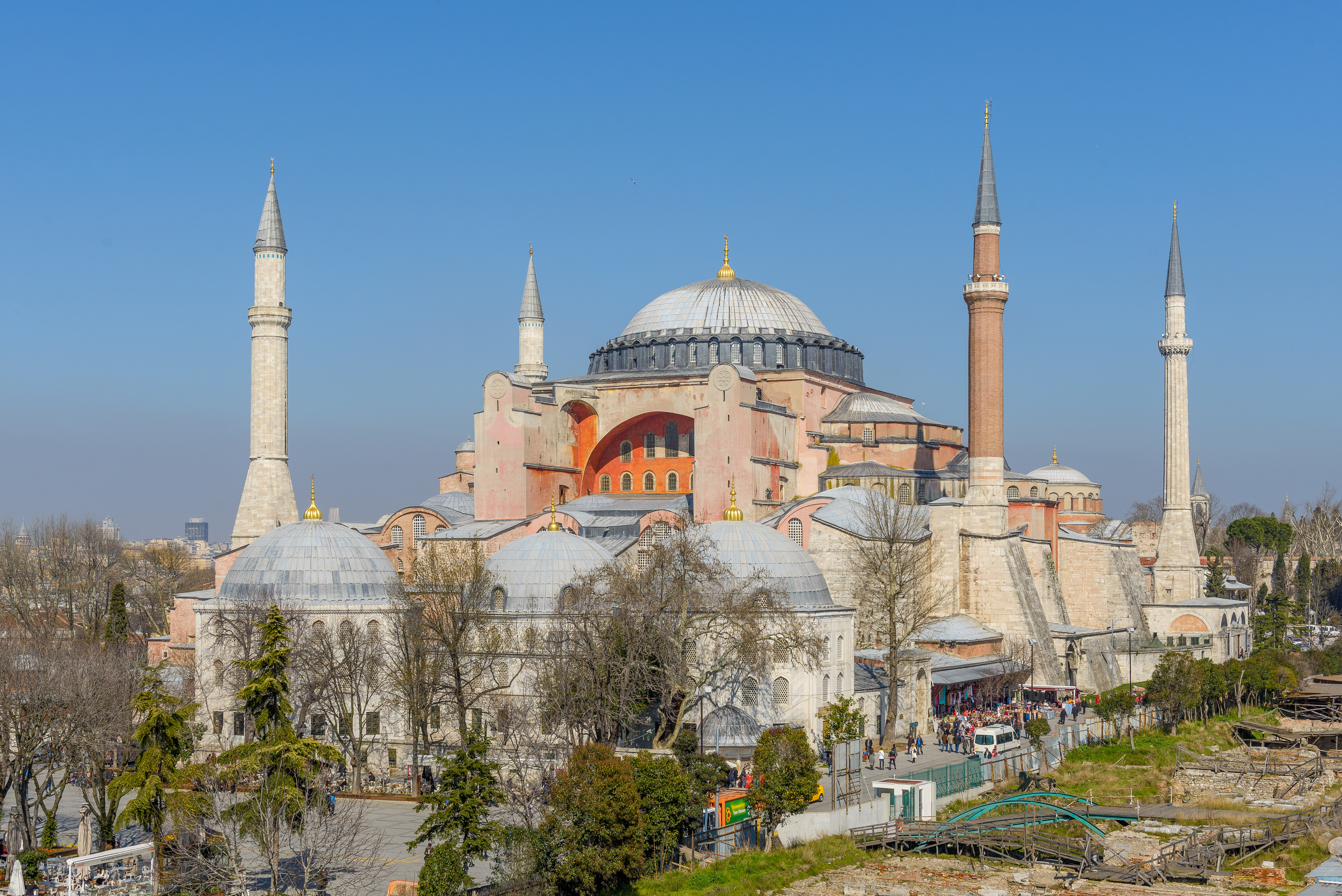
Pronounced (more prettily) in Turkish as Ayasofya. This structure was commissioned as a Christian church but was eventually made into a mosque. Come take a peek.
You can read here about the mosque’s history on its official site.

The British Museum is currently hosting an exhibition :How did the Islamic world influence Western art? It runs until January 2020, if you’ve got some free time over the winter break. From their site:
Known as ‘Orientalism’, this representation of the East in Western art often blurred the line between fantasy and reality. Ranging from painting and decorative arts, interior design to architecture, the objects and artworks depict or refer to subjects and styles from the Islamic World, primarily the Middle East and North Africa.
British Museum Blog
The article goes on to discuss Edward Said’s critique of the wetern representation of the East (how it was distorted).
Learn something new every day. My “new” is the origin of Aladdin isn’t what I thought (nor is its new Disney rendition “just a story/movie”).
Should artifacts be given back to their countries of origin? One example is Egypt’s desire for the British Museum to return a lot of Egyptian artifacts to them. Seems fair.
An argument against this, however, is the concern for the physical safety of those objects if they were returned to their origins. This article justifies that concern.
But is simply taking artifacts out of their environment the only answer? The British Museum doesn’t think so. Read here about their “Iraq Scheme” in aiding the country in the discovery and preservation of its heritage.
If history could have a tagline, the arguably best one would be “It’s not what you think.” This article delves deeper into the “the victors write the history,” schtick and also looks at how “those who come after” muddy the waters further when they rewrite it. This is about “how powerful people have shaped our understanding of various phenomena and of religion.”
http://mizanproject.org/censored-manuscripts-censored-intellects/
Also: This article comes from MIZAN, an open access, peer reviewed Journal for the Study of Muslim Societies and Civilizations. I am confident it will prove to be a legitimate resource for research if not for anything else than to serve as bread crumbs leading to something more substantial.
This is an interesting article “about the depth and range of Hindu-Muslim encounters in premodern India” and the neglected literature of Muslim authors in India (whether Indian themselves or not).
It discusses the co-mingling of culture and its effects (always a cool topic) both from the east and west, but mainly India.
This is Colorado State University’s library guide for medieval Middle East history. It lists primary, secondary, and tertiary sources and websites for sundry topics within our purview. (It may help with research topics too.)
If the link above doesn’t work:
© 2026 Medieval Islamic Civilization
Theme by Anders Noren — Up ↑