Course Discussion Website

Author: NancyCouturier (Page 5 of 6)

Comics, Narrative and the Archaeology of the Ancient Near East

This article is written by an archaeological illustrator who argues for the use of comic (and other) visual aids, but is also concerned about, basically, too much of a good thing:

“Audiences are perhaps now so used to seeing photographs, paintings, cutaway drawings and 3D models – even filmed reconstructions – of the ancient Near East that I wonder if they have stopped really “seeing” the information they contain. These ways of representing have become so familiar to people that they may think they already know all there is to know about the subject, making it harder to communicate the importance or impact of new research.”
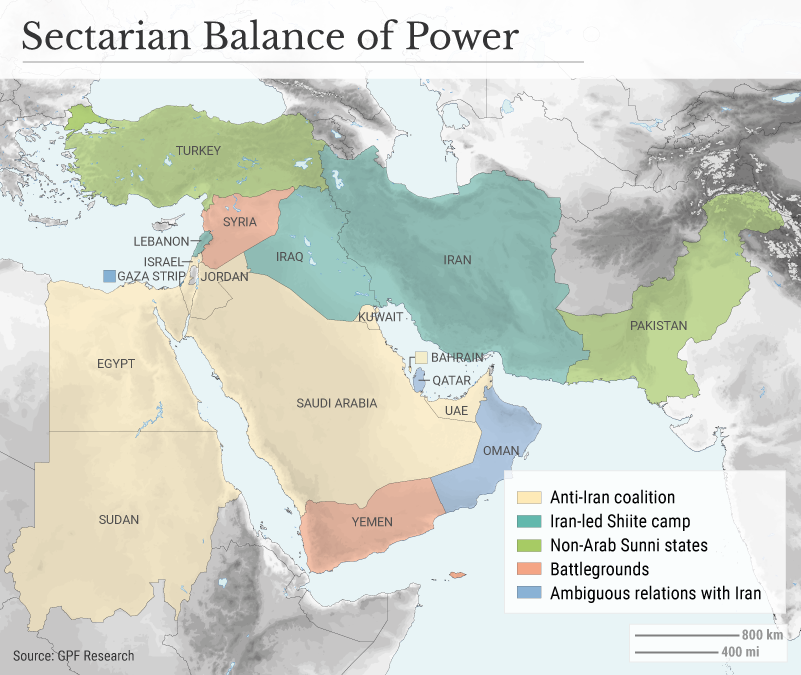
Medieval Times in the Modern Middle East

If you can make sense of this, you’re an adult–a very adulty adult. There are lots of nine-dollar college terms in the article I’ve heard before but loath to be tested on: nationalism, geopolitics, transnational, nation-states, political economies, sectarian . . .

I mean, the author’s “about” info is even beyond me: “George Friedman is an internationally recognized geopolitical forecaster and strategist on international affairs and the founder and chairman of Geopolitical Futures.”

It does have some useful maps (read pictures), though, like this one:

It has an intriguing title. Give it a read and let us know what it’s about.

Bard Graduate Center Symposium—Antiquarianism in the Islamic World

“‘Antiquarianism’ is the term of art used to describe the investigation of the European past through its material remains before art history and archaeology emerged in the nineteenth century as the disciplines devoted to its study.”

This symposium is on the study of how the Islamic world studied the past.

Titles of ~30-45 minute talks include: -The Wisdom in Ruins: Veneration of the Material Past in the Medieval Islamic World —The Notion of Ruins in the Medieval Islamic World -Appreciating, Collecting, and the Meaning of Ancient Objects in the Early and Middle Islamic Period -Negotiating Cultural Continuity in Early Islam: The Future of Ancient Knowledge –The Near Past, the Distant Past, and the Political Legitimacy of the Fatimids and Buyids -Antiquarianism and Encyclopedism in the Fourteenth Century -Artefacts as Evidence in Muslim Historical-Legal Scholarship -Philology, Forgery, and Superstition: The Fierce Debate over the Shrine of Sayyida Zaynab in Early Twentieth-Century Egypt

(“Bard Graduate Center is devoted to the study of decorative arts, design history, and material culture through research, advanced degrees, exhibitions, publications, and events.”)

Muhammad, Republican Revolutionary?

“In 17th-century England, talking about Islam was a way of criticising the powers that be. When an introduction to the first translation of the Quran described a ‘leader of a band of fugitives’, was it aimed at the Prophet or Oliver Cromwell?”

L'Alcoran de Mahomet, André du Ryer, 1647.
The first English translation of the Koran was not from an Arabic text but a French translation of Arabic.

Link

The important take away from this is the denegrating tone toward Islam in the 17th century.

Did you know there is a Museum of the Palestinian People in DC?

Exterior of the Museum of the Palestinian People

There sure is–brand new and complete with seasonal exhibits and everything.

Here’s the info from their “visit us” page on their website:

Open Thursday – Saturday, 12pm-6pm.

General admission – $5/person. Purchase at the door. Donations are welcome.

*Tours for 5+ people can be arranged outside normal weekly hours when booked at least two weeks in advance by emailing info@mpp-dc.org.

Located at 1900 18th St. NW, Washington, DC 20009, on the corner of 18th and T street.

« Older posts Newer posts »