Course Discussion Website
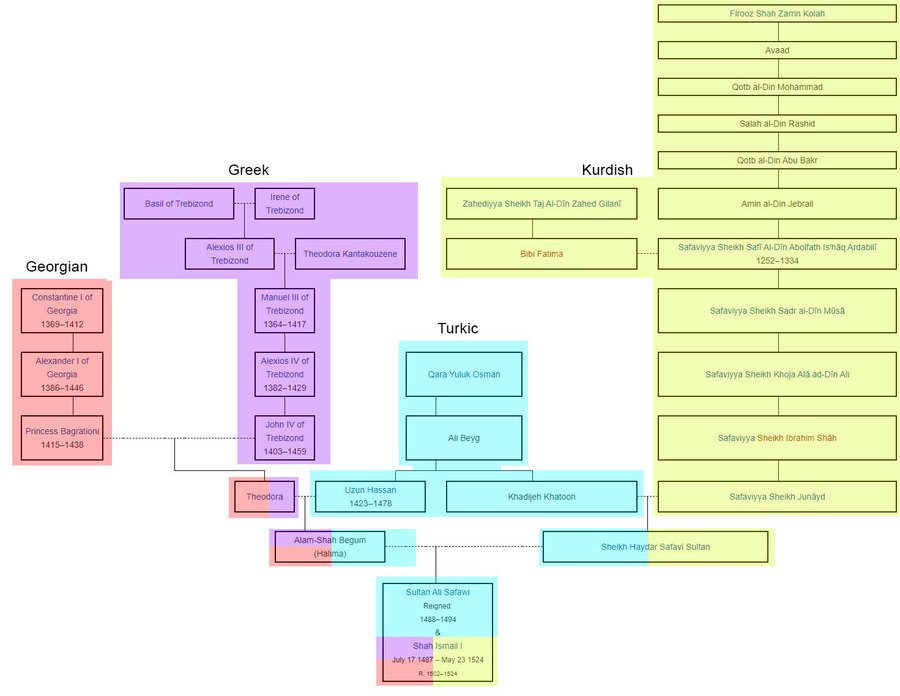
Someone on X had a good family tree for Shah Ismail, explaining the “perfect storm” mentioned in lecture.
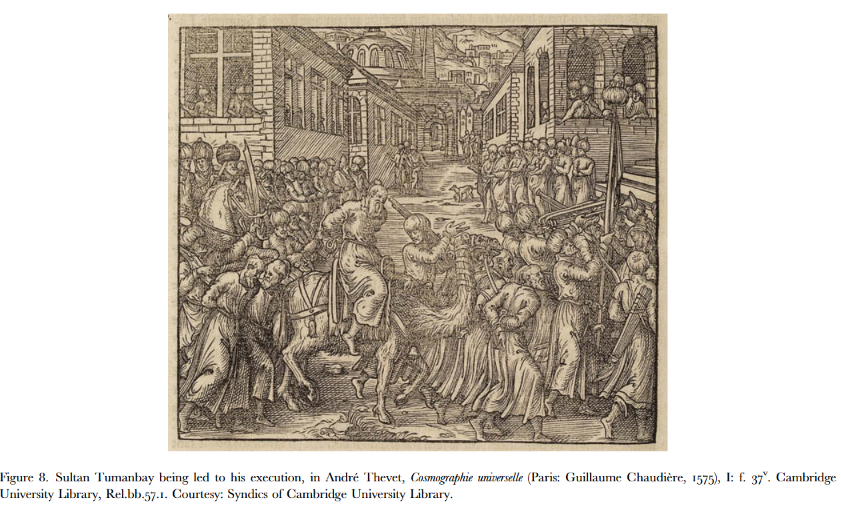
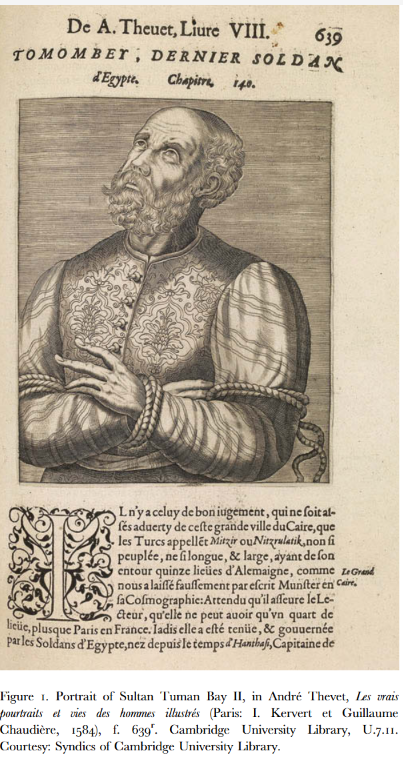
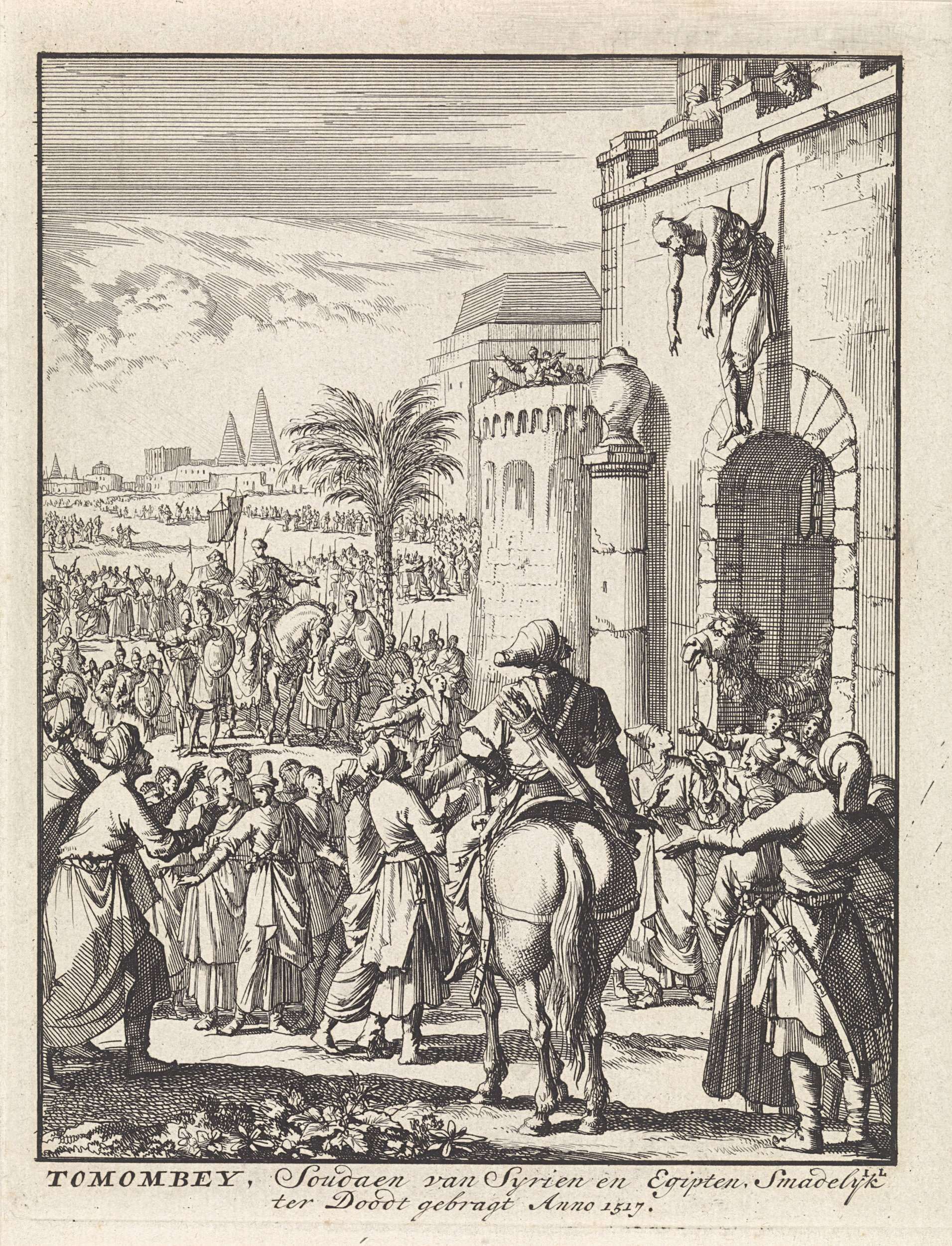
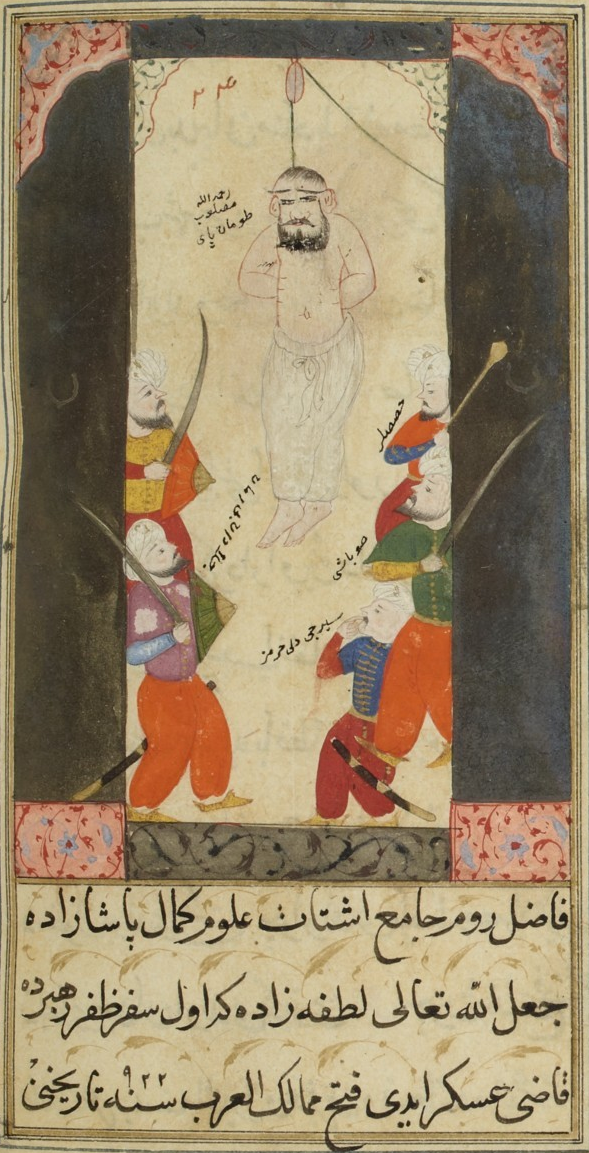
Weirdly enough,a lot of Europeans took inspiration from the story of Tumambay/Tuman Bay, including biographies and artwork. I found this article which gives somewhat of an overview and focuses on Andre Thevet’s Les vrais pourtraits et vies des hommes illustrés. According to Milwright, “Thevet’s illustration shows the sultan bound in ropes, bare-headed and looking upward in a beseeching manner that invites comparison with European representations of Christian martyrs.” I have put up some of the European images as well as some of the more Islamicate art about the event. Milwright suggests that the Mamluk obsession, as opposed to just the oriental obsession, is because of the cultural exchanges that happened in Venice.
In Islam, the idea of niyyah is rooted in the idea that one’s actions are not just important, but their intentions as well. For example, if someone is fasting during the month of Ramadan, but accidentally eats, then it is as if they did not break their fast. Below is a comical video where someone called a sheikh with a question during Ramadan.
This is an example of Mu’tazila, the concept of striving for justice in this world and forbidding evil that is prominent in Shia ideology.
https://pmc.ncbi.nlm.nih.gov/articles/PMC6077049
Amr SS, Tbakhi A. Ibn Sina (Avicenna): the prince of physicians. Ann Saudi Med. 2007 Mar-Apr;27(2):134-5. doi: 10.5144/0256-4947.2007.134. PMID: 17420624; PMCID: PMC6077049.
This guy does a good job of explaining the appanage system and his voice is awesome.
© 2026 Medieval Islamic Civilization
Theme by Anders Noren — Up ↑