The Institute for Palestine Studies-USA and the Middle East Institute are pleased to announce “Keyword: Palestine II,”* an exhibition of artworks donated by Arab and Palestinian artists to the Institute for Palestine Studies-USA. The exhibition will be open from March 2nd – 20th and will be accompanied by a silent auction of the artworks.
Proceeds from the sales will go to support the Institute for Palestine Studies-USA. The Institute’s work has been a model of independent thinking and sober scholarly work on Palestinian and Arab affairs through historical and academic research and documentation.
These artists were brought together by a common aim – to support the Institute for Palestine Studies in order to assert the Arab character of this institute, highlight the centrality of the Palestinian cause and reinforce the ties of communication and cooperation between intellectuals, artists, and academics in the Arab world.
*The first edition of this exhibition took place in Beirut, Lebanon in 2018.
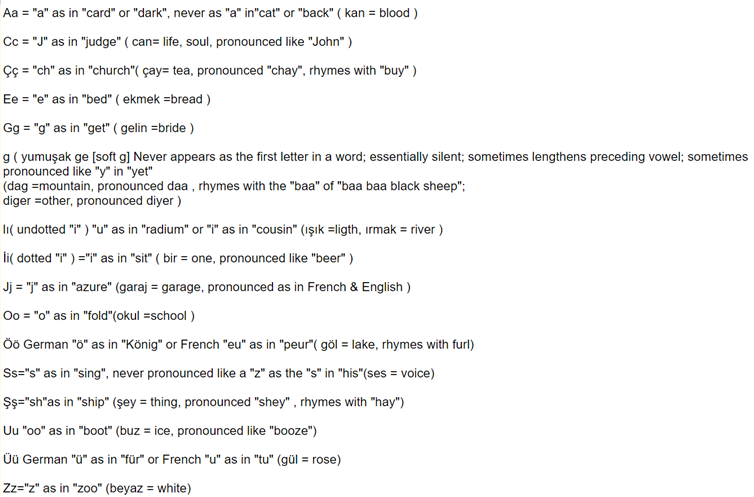
The “Republic of Turkey Ministry of Culture and Tourism” has an article on the Turkish Cultural Foundation’s website that briefly explains the origin of dervishes before focusing on Haci Bektas-i Veli (“a great Turkish thinker”). The brief explanation of dervishes alone is worth the click.
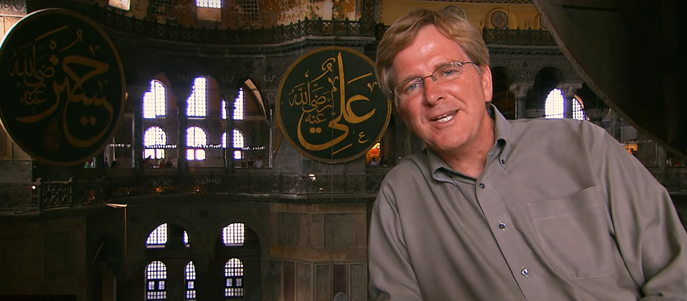
The famous PBS travel show host has a great agenda for his 25 minute episode of Istanbul: “We’ll lose our way in the Grand Bazaar and munch our way through the famously fragrant Spice Market. We’ll follow the fall of the ancient capital of Byzantium and the rise of Islam at the city’s ancient wall, and wander among the treasures of Hagia Sophia, the Blue Mosque, and Topkapı Palace. To escape the city bustle, we’ll cruise the churning waters of the Bosphorus, make friends over backgammon, and try a traditional Turkish bath.”
While we’re with him, we may as well follow him along to Central Turkey and learn about general precepts of Islam in another episode. For that matter, he also has two more episodes: Eastern Turkey and Western Turkey. Each episode does not entirely cater to our class’s purview, it has a least a little something to enhance our understanding of our studies.
This is a documentary of the Ottomans. It is one of four documentaries in a series that addresses the contributions of Islam to the world in science, trade, architecture, art, and writting.
Here is a guide for the series from PBS. It provides resources too, like a bibliography.
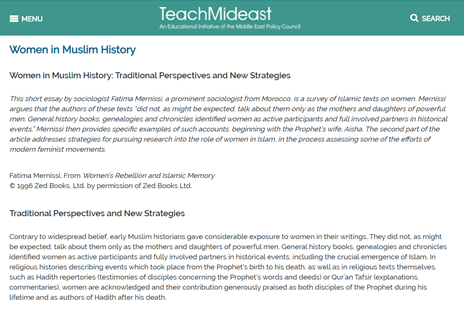
This webpage lists many primary and secondary sources for women in Islam, from fighting along side Muhammad to their being sold as slaves. Its timeline begins with the 7th century and continues through the Early Modern Era. Many sources have snippents in the article that are super interesting (like the account of the woman who fought by the side of Muhammad during the Battle of Ohud).
This article explains the discovery of a portion of 10th century physician Ibn Sina’s encyclopedia The Canon of Medicine, translated into Irish in the 15th century. Once its own volume, it was later repurposed as the binding of another book. The work has now been digitized and preserved online here.
Architectural Digest: Middle East wrote a preivew for a new(ish) book: Mosques: The 100 Most Iconic Islamic Houses of Worship. The article showcases exceptional Islamic architecture beyond the “Balkans to Bengal” bubble to include not-to-be-missed, rightly-labeled icons, beginning with Spain’s Great Mosque of Cordoba.